
From Backyard to Biosphere: How One Volunteer Helped Root a Global Wildlife Network in the Wabash Valley
From Backyard to Biosphere: How One Volunteer Helped Root a Global Wildlife Network in the Wabash Valley
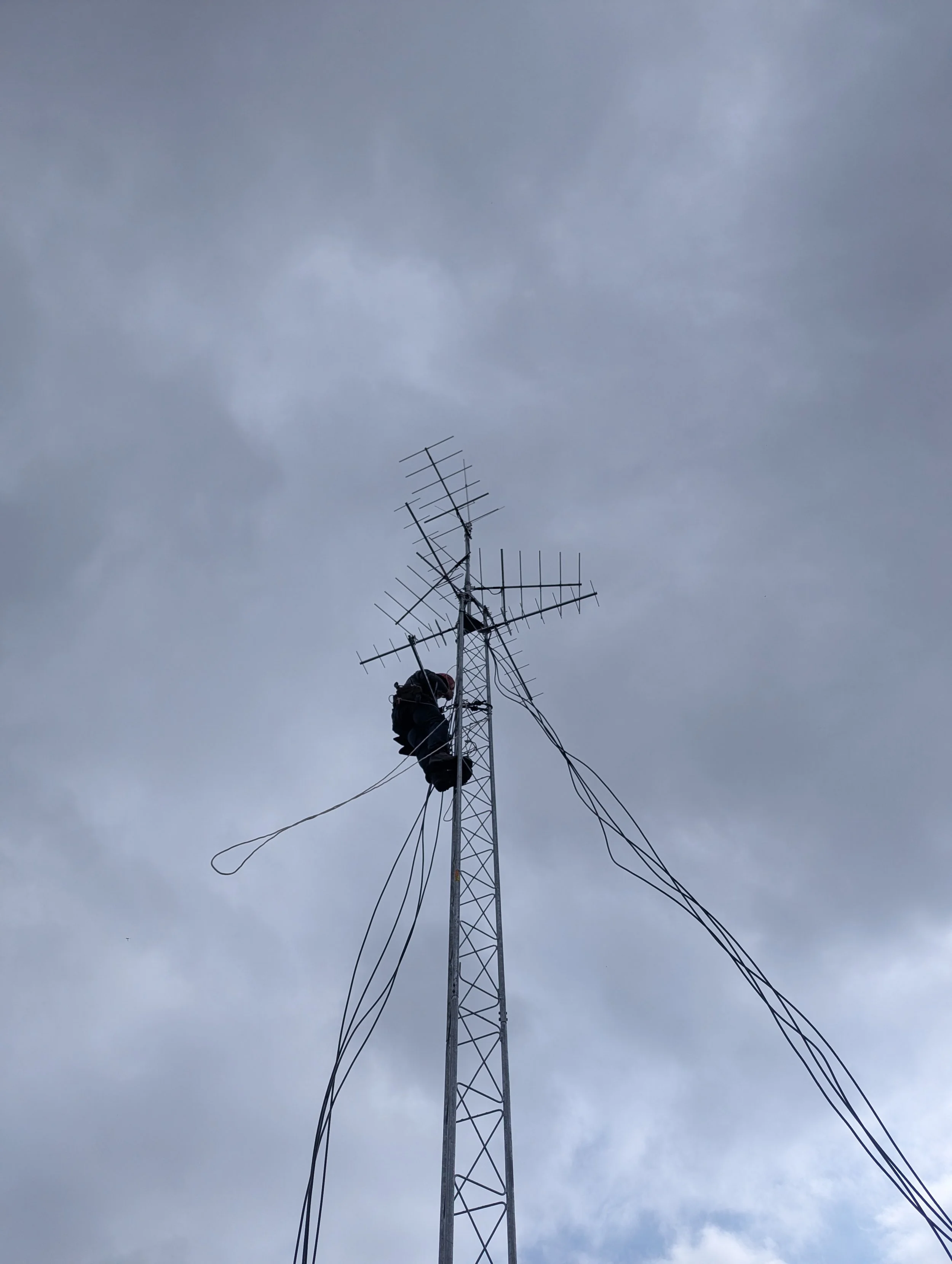
At first glance, it looks like a modest installation, an antenna rising quietly above the trees at Ouabache Land Conservancy’s Atherton Island Natural Area. But for board member Jim Nardi, that tower represents something far bigger: a bridge between the Wabash Valley and a sweeping, hemisphere-wide effort to understand and protect wildlife.
“This really was Marty Jones and Tom Zellers’ brainchild. They’re the ones who instigated this project,” Nardi said.
Still, like many of OLC’s most ambitious projects, the Motus Wildlife Tracking System tower didn’t come to life through one idea alone, it took a constellation of volunteers, expertise, and, in Nardi’s case, the right place at exactly the right time.
A Move That Mattered
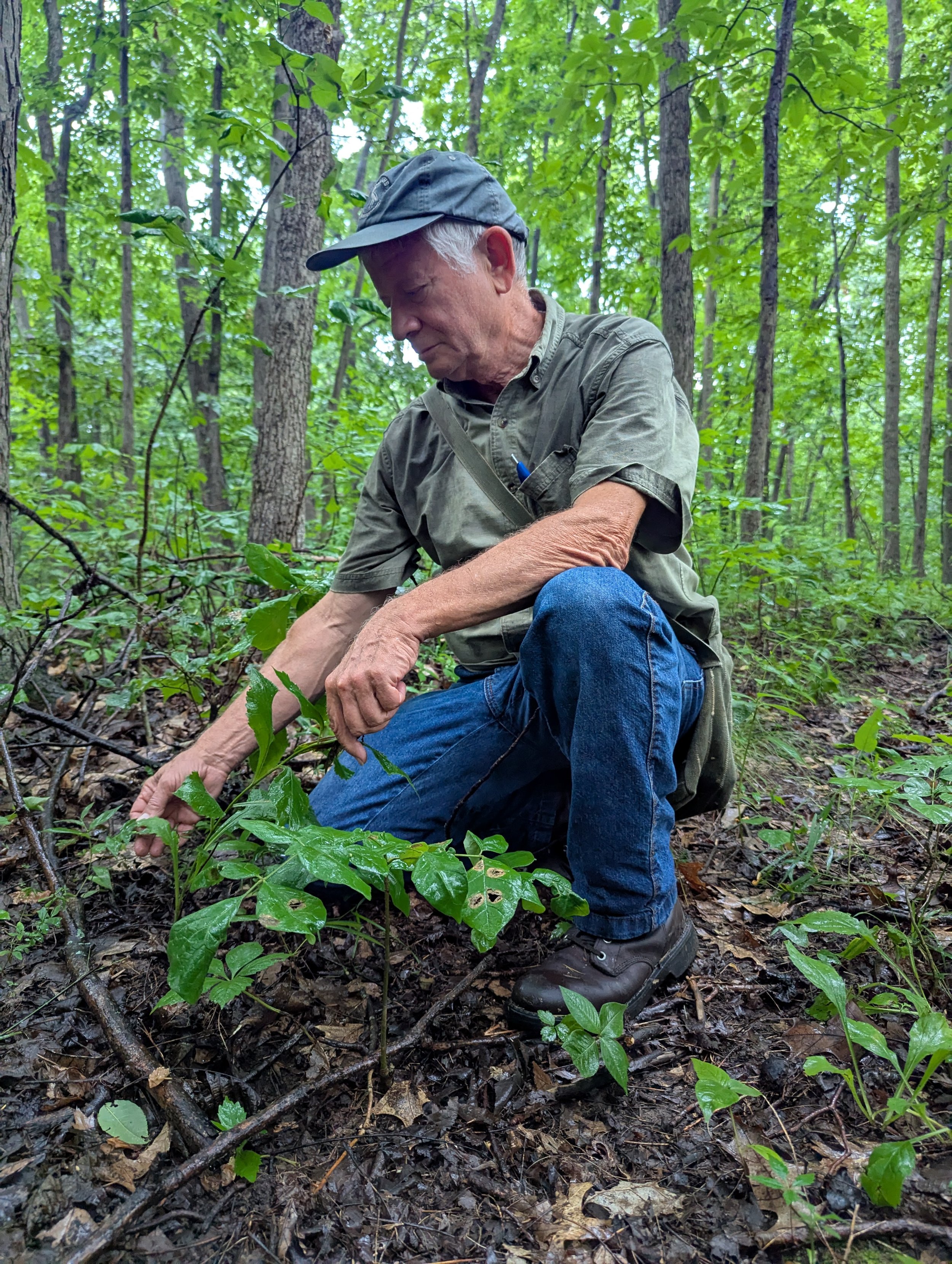
Nardi and his wife, Joy, hadn’t planned on moving again. After 47 years in Urbana, Illinois and a major transition to Clinton, Indiana, the idea of relocating once more felt daunting. But their decision to purchase a home adjacent to Atherton Island changed everything.
“We weren’t in a mood to move again, but we did decide to purchase this house, and we’re delighted we did… I can just step out the back door and be in the nature preserve,” Nardi admitted.
That proximity turned out to be more than convenient; it was transformational. A garage on their property offered what the Motus tower project needed: shelter, elevation, and access to electricity. Combined with its location high above the Wabash River Valley, a known migration corridor, it checked every critical box.
“It meets all the default qualifications. We have easy access to electricity. We have the building. We’re at a high point,” Nardi said.
Even the state’s top bird expert agreed. After visiting the site, Indiana State Ornithologist Allisyn-Marie Gillet confirmed it was “an ideal location.”
A Window into Migration
Now fully operational, the tower connects Atherton Island to a vast international network stretching from Alaska to South America. It detects signals from tiny transmitters attached to wildlife, offering real-time insights into migration patterns.
“We will be part of a hemisphere-wide network that can monitor the migration, primarily of birds. But it can also be adapted to study bats and even larger insects, such as dragonflies and monarchs,” Nardi explained.
The implications ripple far beyond the Wabash Valley. These data help scientists understand where species travel, where they struggle, and how to better protect them. “This information will be crucial to conserve these creatures,” he said.
Built by Volunteers, Powered by Collaboration
While the technology may be advanced, the heart of the project is deeply human.
OLC operates as an all-volunteer organization, a fact Nardi believes makes the achievement even more meaningful. “Each volunteer has certain strengths and expertise, and by combining all these, we are able to accomplish great things,” Nardi said.
That collaboration proved essential. From construction and wiring to navigating the complexities of new technology, the process was more challenging than expected. “It turned out to be more difficult than one anticipated, but through teamwork, we were able to accomplish this technological feat,” Nardi explained.
The successful completion also demonstrated something important to funders like the Sam Shine Foundation: that a volunteer-driven organization can deliver on big, complex ideas.
Science with No Ceiling
If the tower’s first phase is about connection, the next phase is about discovery, and unpredictability.
“There will probably be many unanticipated discoveries. I don’t think we can predict all that we will find,” Nardi explained.
Those early findings will shape future research, experiments, and conservation strategies. And perhaps just as importantly, they will open doors for education and engagement within the community. For Nardi, that sense of possibility is part of what makes the project so powerful.
“I’ve always had a passion for natural history, from microbes to vertebrates. If I can facilitate the study of natural history in any way, I’m just delighted,” Nardi added.
A Local Effort with Global Reach
Standing beneath the tower today, it’s easy to miss the scale of what’s been achieved. There’s no flashing lights, no dramatic fanfare, just quiet data collection happening in the background. But that quiet work connects the Wabash Valley to something immense. “We’ll be able to cooperate with people from Alaska to South America. Who knows where these connections will lead?” Nardi added.
In a time when environmental challenges can feel overwhelming, the Motus tower offers a different kind of story, one where local action feeds global understanding, where volunteers power innovation, and where a simple backyard structure becomes a listening post for the rhythms of an entire hemisphere. Or, as Nardi put it with quiet pride: “I’d like to brag to people that we finally have an antenna—and that we’re part of this greater network.”