
From Protected Woods to a Place of Discovery
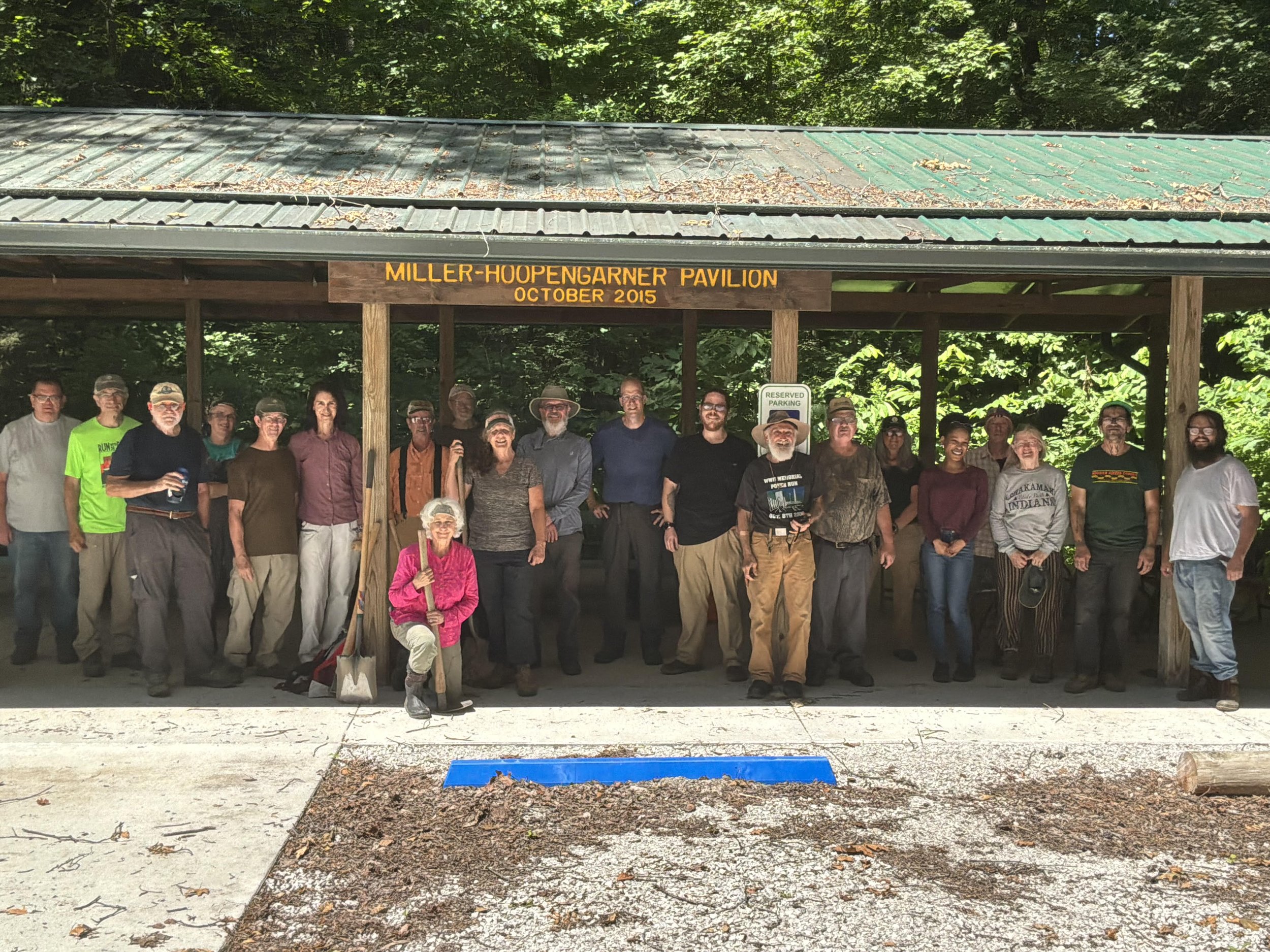
Workday with Hoosier Hikers Council in June 2026
Ouabache Land Conservancy’s partnership with Hoosier Hikers Council brings thoughtful trail design and community connection to Bushnell’s North Star Woods. Before volunteers shaped the trail at Bushnell’s North Star Woods, Ouabache Land Conservancy faced a question at the heart of its work: How do you invite people into a natural area while protecting what makes it special?
One answer emerged above Sulphur Creek. An early idea would have taken hikers down toward the water. But experienced trail builders studied the terrain and recognized that the flat ground near the creek would make drainage difficult. A trail there could remain wet and require ongoing attention. Instead, they found a route along the bluff, offering a view of the creek while following ground better suited to a lasting trail. For visitors, the result is a scenic stop along a walk through the woods. For OLC, it illustrates the care that continues long after a property is protected.
Conservation Continues After the Land Is Protected
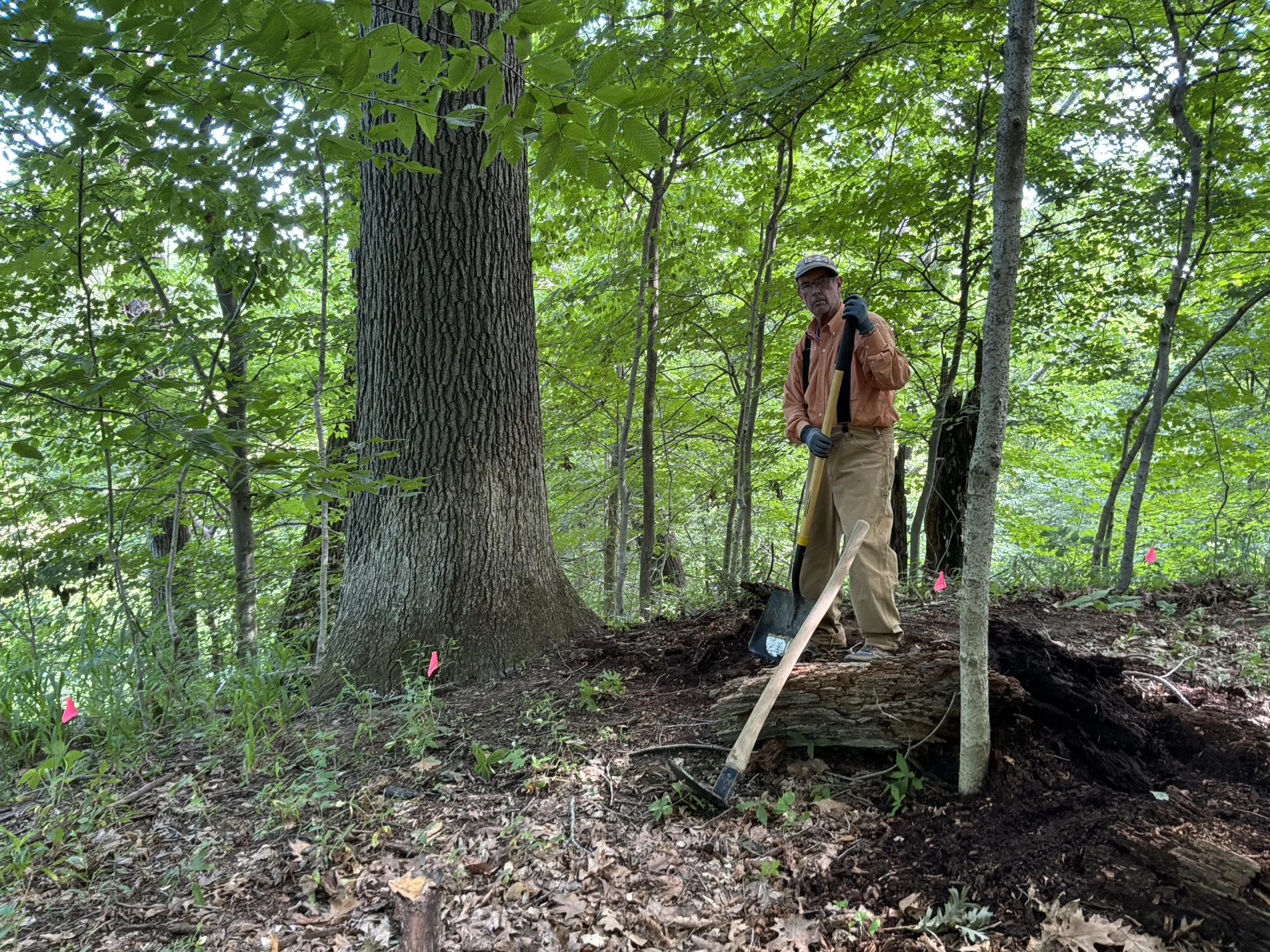
Bushnell’s North Star Woods is a 124-acre woodland in Terre Haute’s historic Lost Creek Settlement. Protected by Ouabache Land Conservancy and now open to the public, the property offers wooded slopes, views of Sulphur Creek and a setting for people to connect with the natural landscape. Making that experience possible takes planning, ongoing stewardship, and people willing to contribute their skills.
At Bushnell’s North Star Woods, OLC partnered with Hoosier Hikers Council to develop a trail that would introduce visitors to the property while accounting for its terrain and long-term maintenance needs. The partnership combined OLC’s knowledge of the preserve with the council’s experience designing and building natural-surface trails. Together, volunteers worked through decisions that turn a route through the woods into a durable place to hike. The work helps explain an often-overlooked part of land conservation: protecting a property begins a continuing responsibility to care for it.
A Partnership Grounded in the Landscape
Pete Banta, a longtime Hoosier Hikers Council board member and former president, helped coordinate the trail project. He joined the organization around 1996 and has spent decades planning routes and organizing volunteer workdays. Founded in 1995, the council operates without paid employees. Banta estimated about 250 members, including roughly 30 active volunteers.
For conservation organizations like OLC, volunteer expertise can help move a project from idea to finished trail. At Bushnell’s North Star Woods, Banta and other experienced trail builders walked the property with OLC representatives Phil Cox, Brendan Kearns, and others. They discussed boundaries, features to highlight, and areas to avoid before identifying a route.
That exchange mattered. Designing the trail required understanding both what OLC hoped visitors would experience and what the land could sustainably accommodate. The creek overlook became one example of how those priorities could work together.
Why a Trail Goes Where It Goes
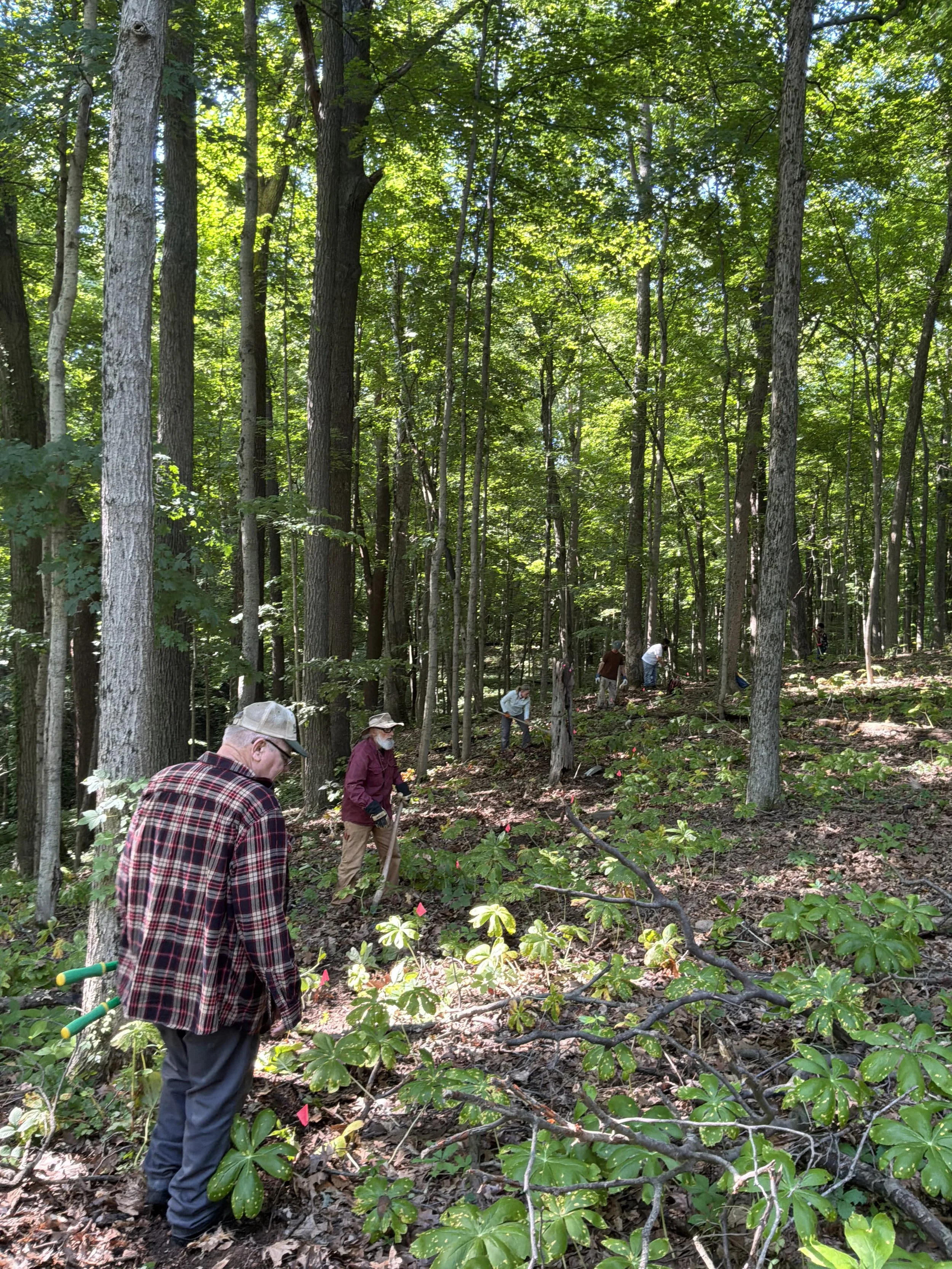
A well-designed trail can feel so natural that hikers scarcely consider how it came to be. Yet every curve and change in elevation can serve a purpose. Banta explained that water is central to the design. A straight uphill path can channel runoff, letting it gather speed and wash away soil. Following the contours of a hillside, with carefully placed rises and dips, gives water opportunities to drain off the walking surface. The objective is a trail that resists erosion, needs relatively little maintenance, and provides an enjoyable hike.
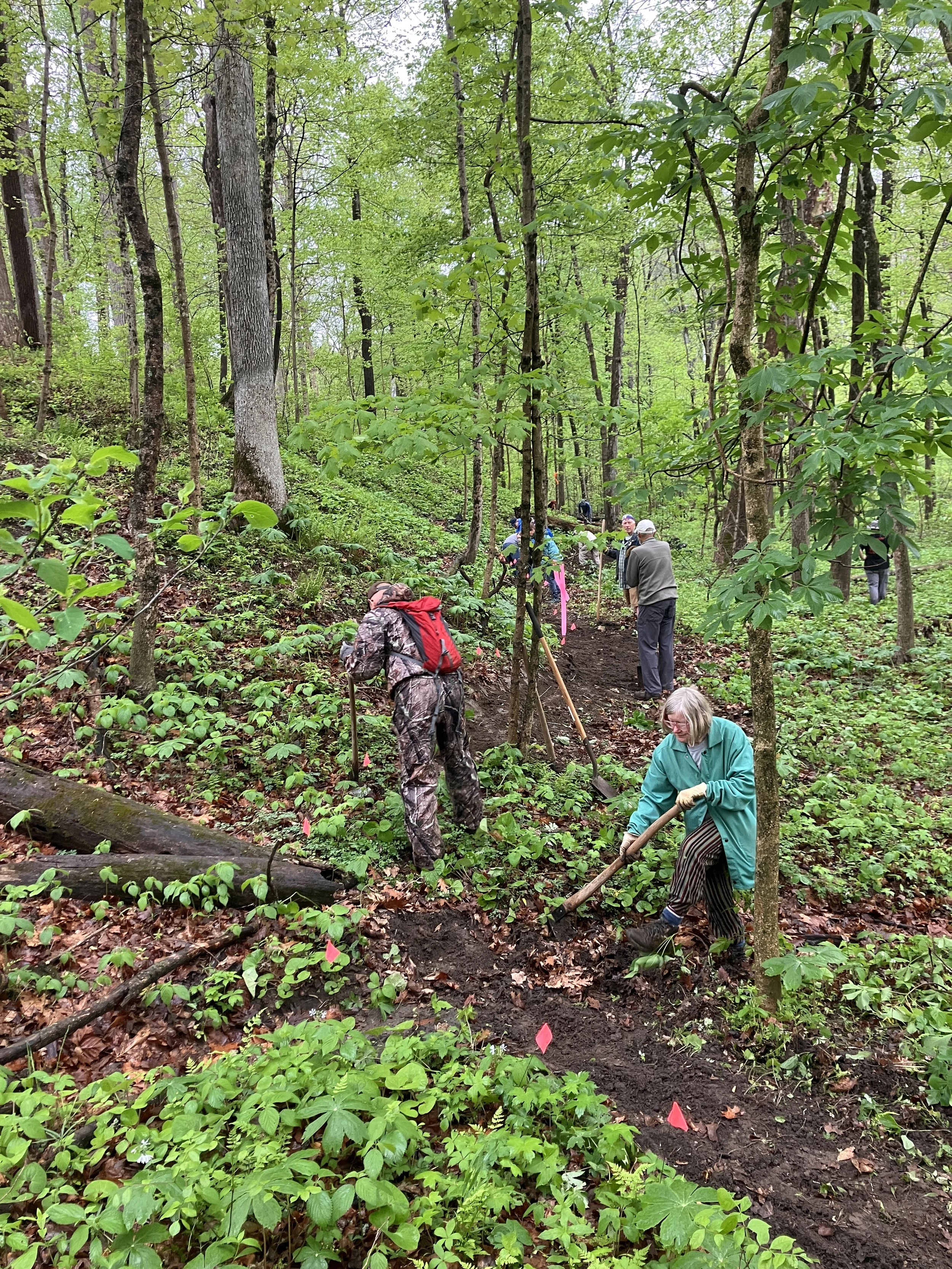
At Bushnell’s North Star Woods, the team also worked around steeper sections and an old road, adjusting the route to create a manageable path through the property. After scouting the general route, a smaller crew placed flags to mark precisely where construction would occur. That preparation gave volunteers a clear plan when they arrived for workdays. For OLC, these decisions have lasting value. A trail designed with drainage and terrain in mind can help reduce future maintenance demands while giving visitors a dependable way to explore the preserve.
Volunteers Turn Planning into Public Access
With the route established, volunteers began shaping the trail by hand. Using specialized tools, they cleared and leveled the walking surface, taking care not to let displaced soil trap water along the edge. Experienced builders taught newcomers the work and explained why. Banta recalled crews of roughly 12 to 15 people at Bushnell’s North Star Woods, with trail construction taking place over three workdays after the initial planning and flagging.
Each workday moved OLC closer to its goal of helping people experience the protected woodland. It also gave participants a direct role in caring for a community resource. Someone who arrived without trail-building experience could leave knowing how a trail drains, why its route curves across a slope, and how their own effort contributed to its future. “We encourage people to take their time, work at their own pace,” Banta said. The council provides tools and instruction, allowing newcomers to learn alongside experienced volunteers.
Building Connections Around Conservation
The workdays also created opportunities for people to connect. Conversations ranged from favorite local hiking spots to longer Appalachian Trail adventures. Volunteers traded recommendations, shared experiences, and gathered for lunch at the preserve’s shelter. “We also provide lunch, which is really popular,” Banta said. Those moments help make the work sustainable for a volunteer-powered organization. People come to contribute, but they also find companionship and reasons to return.
For OLC, volunteer participation creates another connection between the community and the land it protects. A preserve becomes a place where people have invested their time, learned something new, and helped make an outdoor experience possible for someone else. Each time a visitor follows it through the woods, the trail carries that contribution forward.
The Lasting Value of a Walk in the Woods
Banta’s hope for Bushnell’s North Star Woods is simple: that people visit, have a good experience, and come back. For Ouabache Land Conservancy, the trail gives visitors a way to encounter the landscape its conservation work protects. The forest and creek become places people can know firsthand, revisit through the seasons, and develop their own reasons to care about.
The partnership with Hoosier Hikers Council shows how that opportunity is built with local knowledge, specialized skills, careful decisions, and repeated days of volunteer effort.
At the overlook above Sulphur Creek, visitors may pause for the view without thinking about drainage, route planning, or the hands that shaped the path. Their ability to reach that spot and enjoy it is one tangible result of OLC’s stewardship: protected land becoming a lasting part of community life.
Explore and Get Involved
Learn more about Bushnell’s North Star Woods, OLC’s protected properties and ways to support its work at ouabachelandconservancy.org.
Those interested in helping build and maintain trails can also visit hoosierhikerscouncil.org or email hoosierhikerscouncil@gmail.com for volunteer information. No previous trail-building experience is necessary.