
First, We Walk the Land
Not every acre Ouabache Land Conservancy protects becomes a nature preserve. Some remain privately owned, protected through a conservation easement that allows a landowner to conserve important natural features of their property for the long term. And before any land is protected—whether through an easement or another conservation project—there is a much less visible part of the process: learning about the land itself.
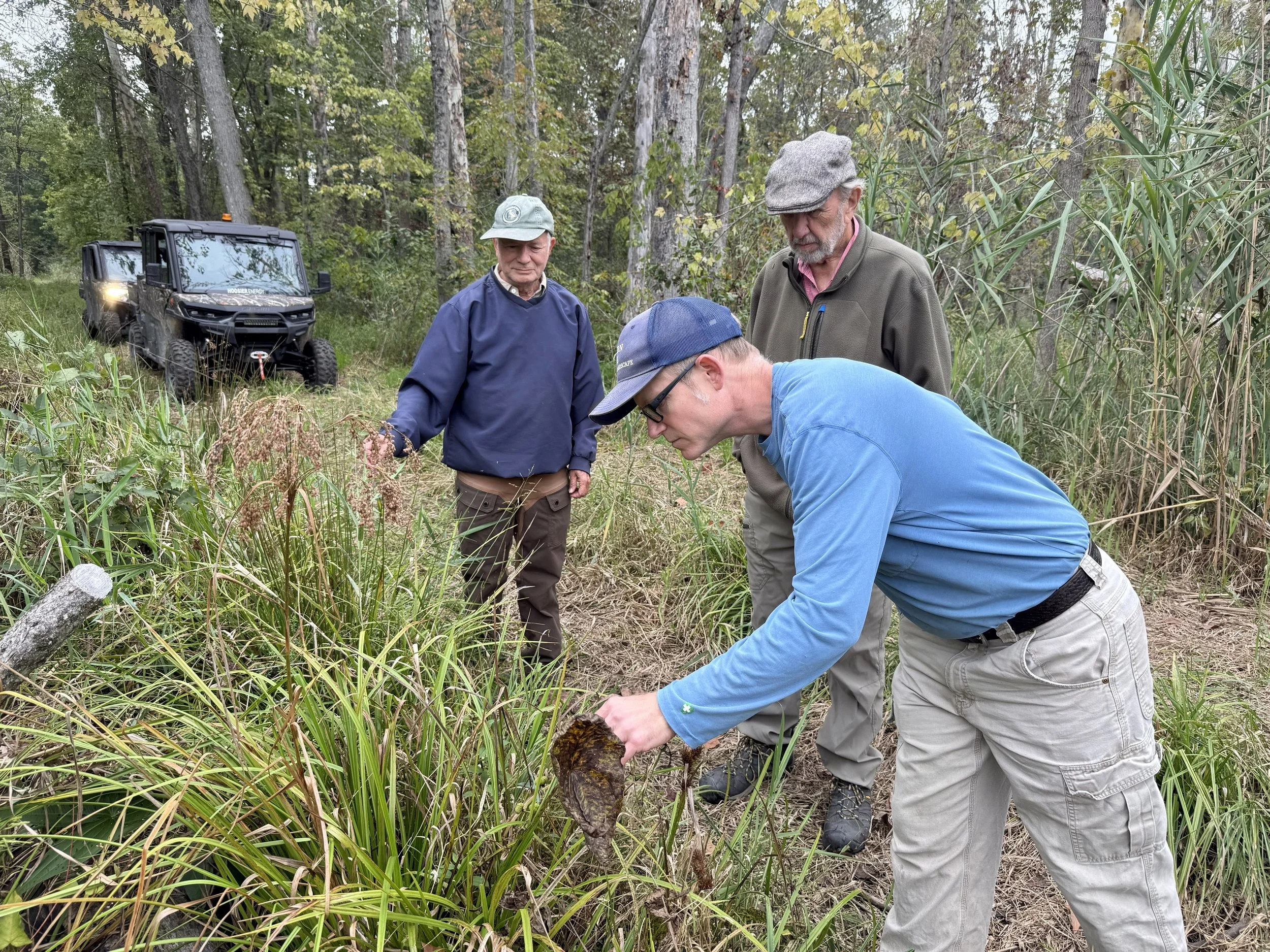
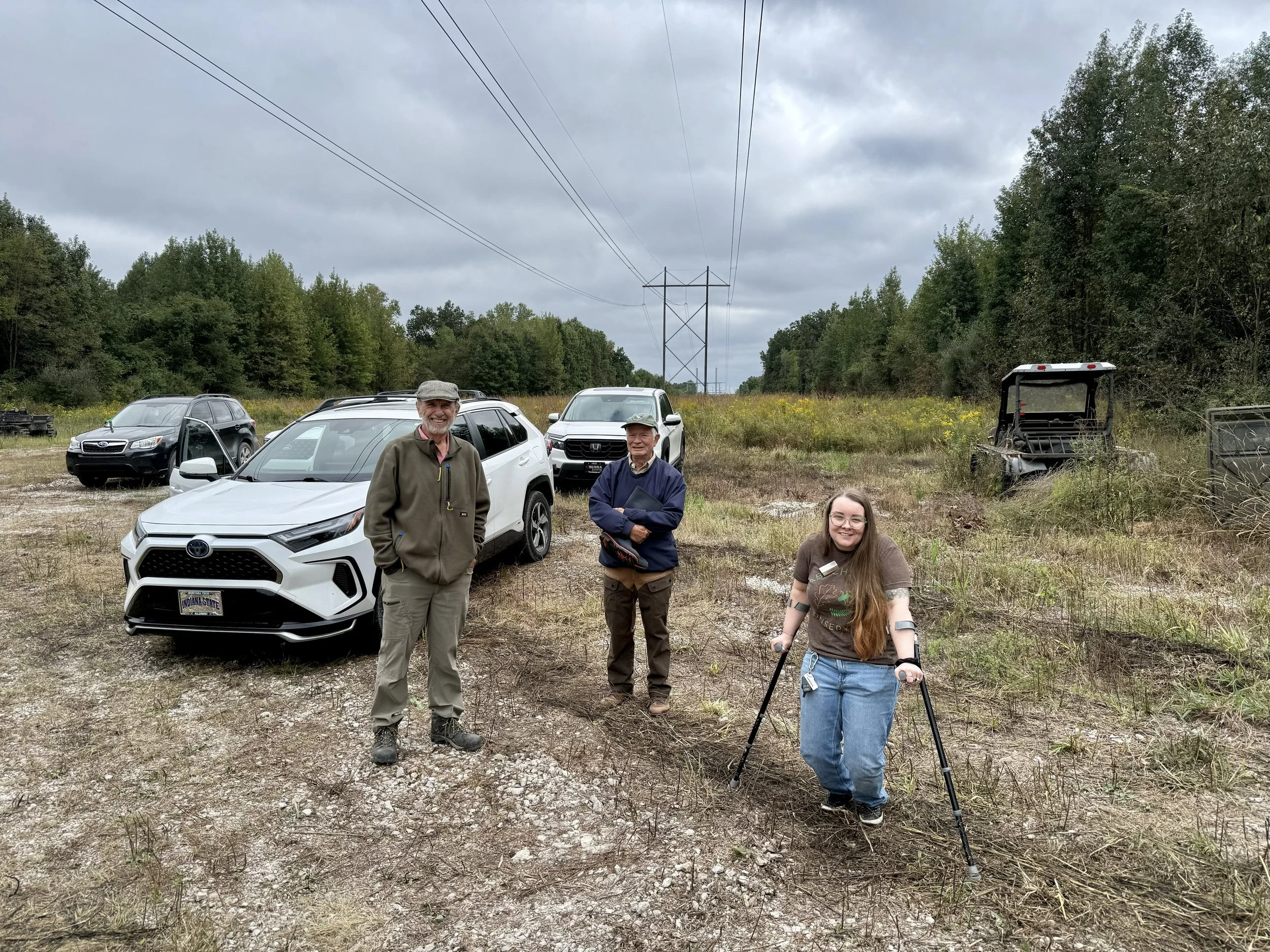
Last week, OLC board members traveled to Sullivan County to visit a privately owned property whose landowner is exploring conservation options.
The visit was preliminary. No decision has been made about whether OLC will ultimately become involved in protecting the property. But days like this are a regular—and important—part of land conservation work.
It often starts with a conversation
OLC regularly hears from people who are interested in protecting land they own. Some reach out by phone or email with questions. Others come to us through conservation partners.
Every property and every landowner's circumstances are different, so each potential project has to be considered individually.
A site visit gives OLC an opportunity to get out from behind maps and property records and experience a place on the ground. Board members can learn more about the property, its natural features and surrounding landscape, and the landowner's goals for its future.
That information helps OLC consider how a potential project fits within the Conservancy's established conservation priorities. Habitat quality, connections to other protected or natural areas, and opportunities to conserve larger landscapes can all factor into those conversations.
A site visit doesn't guarantee that a property will eventually be protected by OLC. It's one step in determining whether a project is a good fit—for the landowner, the land, and the Conservancy.
Protection doesn't always mean ownership
For many people, the most familiar examples of OLC's work are our nature preserves—the places where visitors can hike, attend programs, or volunteer.
But OLC also protects privately owned land through conservation easements.
A conservation easement is a voluntary legal agreement through which a landowner permanently limits certain uses of a property to protect its conservation values. The land itself remains privately owned and is not automatically opened to the public.
That gives landowners another way to think about the future of a place they care about: protecting its conservation value without necessarily giving up ownership of it.
Conservation takes connections
This particular opportunity also illustrates another behind-the-scenes piece of OLC's work: building relationships within the larger conservation community.
OLC was connected with the Sullivan County landowner through Southern Indiana Sentinel Landscapes, which has worked to build a relationship with the Conservancy over several years. Michael Spalding has stayed connected with OLC and helped identify potential land protection opportunities within our service area that might be a good fit for the organization.
Those relationships matter. Conservation organizations may have different geographic areas, expertise, and roles, but staying connected allows us to share information and connect landowners with resources and organizations that may be able to help.
Sometimes the result of those relationships is a phone call, an introduction—and eventually a walk through a property to see what might be possible.
For now, that's where this particular story ends. There is more to learn and consider before anyone knows what comes next.
But that uncertainty is part of the story, too. Long before a property is protected, there are conversations, questions, maps, relationships, site visits, and careful decisions happening behind the scenes.
That's where conservation often begins.