
What a Healthier Creek Looks Like
For more than a decade, Ouabache Land Conservancy and its partners have worked to improve water quality in the Otter Creek watershed through long-term conservation and restoration efforts supported by a Section 319 grant.
At this year’s Experience Otter Creek event at Markle Mill Park, the community had the chance to see what that work looks like in real time.
Bringing the Watershed to Life
Credit: Vigo County Soil and Water Conservation District
Hosted along the banks of Otter Creek, the event invited visitors of all ages to explore the watershed through hands-on activities and demonstrations focused on water quality, erosion control, invasive species, forestry, wildlife, and stream health.
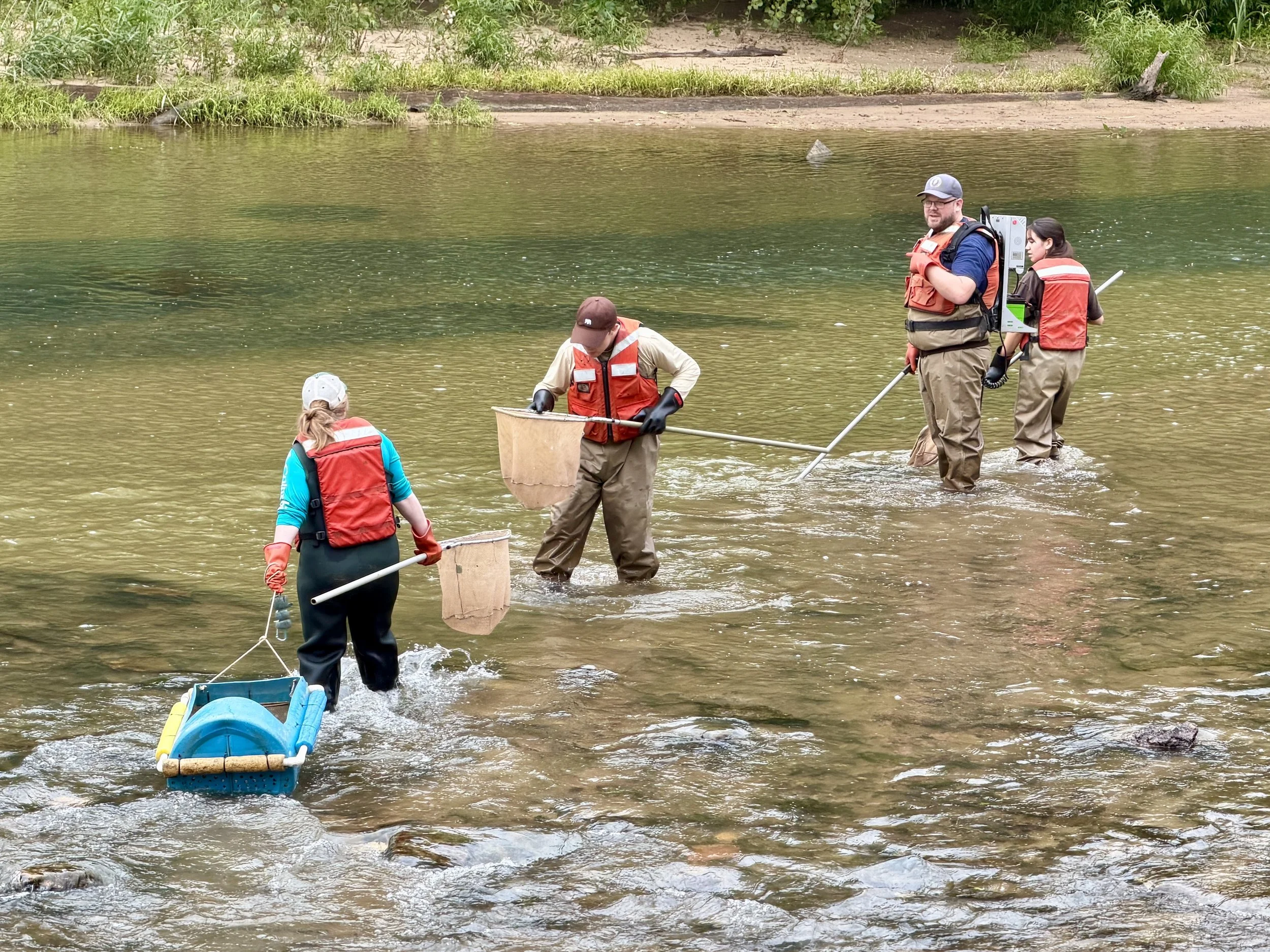
One of the day’s most popular demonstrations came from the Indiana Department of Environmental Management (IDEM), which conducted a live electrofishing survey in the creek. Participants could observe and identify fish species found in Otter Creek while learning how aquatic life reflects the overall health of a stream ecosystem.
But the story of Otter Creek is about more than fish.
Our worked throughout the watershed aims to reduce sediment, excess nutrients, and other pollutants entering the creek from surrounding land uses. That work is critical to improving water quality and supporting healthier ecosystems over time.
Much of this work happens quietly and gradually through restoration projects, conservation practices, and long-term watershed management efforts. Unlike a new trail or public-facing improvement, the results are often difficult to see day to day.
But over time, those efforts begin to show.
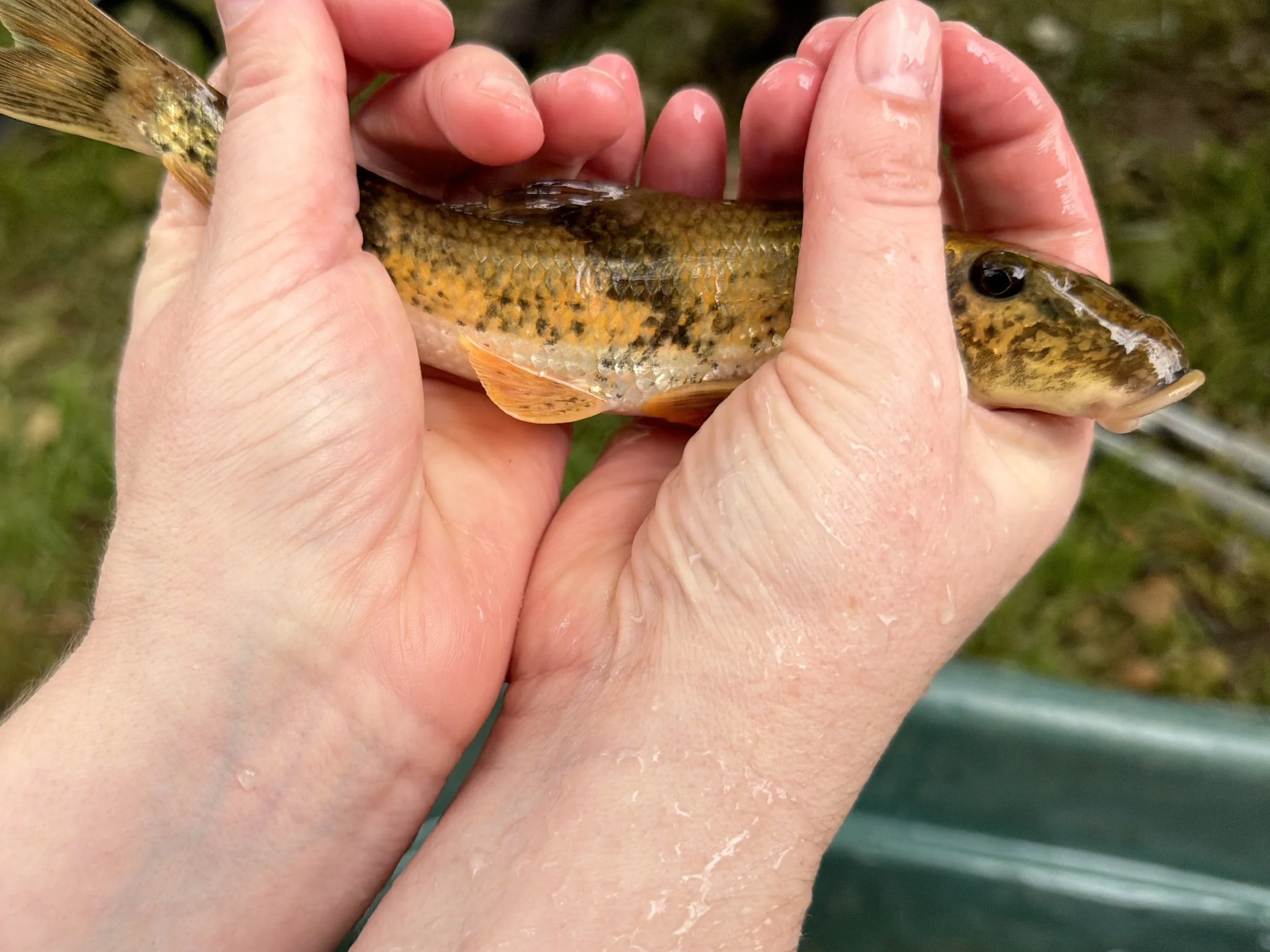
Local conservation partners noted that Otter Creek has become significantly healthier. During this year’s survey, IDEM identified 24 fish species within the sampling reach, including smallmouth bass, longear sunfish, rainbow darters, and stonecats—one visible sign of improving conditions.
Conservation You Can’t Always See
Credit: Vigo County Soil and Water Conservation District
Experience Otter Creek helps make this kind of conservation work more tangible.
By bringing people directly to the creek and connecting them with scientists, conservation professionals, and local organizations, the event creates opportunities to better understand how land stewardship, water quality, and ecosystem health are deeply connected.
In addition to the electrofishing demonstration, attendees learned about invasive species, birds, bats, trees, raptors, and macroinvertebrates, while Providence Wildlife Rehabilitation introduced visitors to Stirling, a great horned owl, and Artemis, a barred owl.
Ouabache Land Conservancy also distributed free native tree seedlings, including white oak, red oak, tuliptree, black walnut, and black cherry.
Looking Ahead
Events like Experience Otter Creek are a reminder that conservation is not only about protecting land—it is also about improving the health of the systems that connect it all together.
Healthy watersheds support wildlife, recreation, agriculture, and communities alike. And while this work often happens slowly and behind the scenes, its impact can be seen in the long-term health of the creek itself.
We’re grateful to the Wabash River Heritage Corridor Commission, Wabash Valley Audubon Society, IDEM, local conservation partners, and all who helped make this year’s event possible.